Automation for Beginners
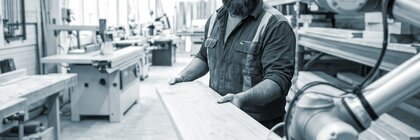



Whether high-precision pharmaceutical filling systems or cleanroom robots in medical device production: An ever-increasing number of robots is deployed in clinical environments as automation revolutionizes the entire healthcare sector value chain. Patient-facing deployments include surgical robots in the operating room and support robots in rehabilitation centers.
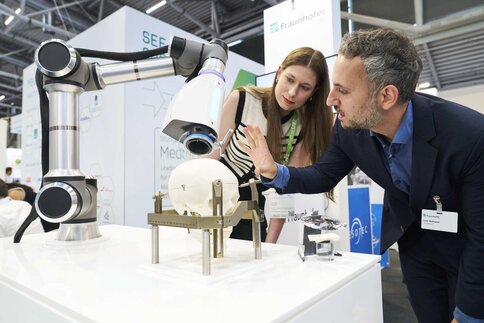
Growth projections for robotic systems in the pharmaceutical, medical, and healthcare sector consistently forecast dynamic, double-digit growth. While the market for highly precise medical robots is driving this revenue growth, pharmaceutical manufacturing and lab automation is rapidly increasing its share of that growth due to the need to improve efficiency and compensate the shortage of specialists.
The joint pavillion brings together manufacturers and service providers from the medical technology supply industry. Discover innovative technologies and make valuable connections across the entire value chain.
How are robotics and automation transforming the healthcare sector? The MedtecSUMMIT brings together experts from medicine, science, and industry to shed light on current developments and specific applications.
Discover MedtecSUMMIT
Medical device manufacturing requires maximum reliability, utmost precision, and uncompromising hygiene. And modern robotics and automation solutions must comply with country-specific regulations. Europe has the so-called Medical Device Regulation (MDR) while the FDA (Food and Drug Administration) guidelines must be complied with in the US. These regulations also include strict cybersecurity requirements.
Despite these barriers to entry, more and more exhibitors offer HealthTech solutions meeting the strict requirements. For example, modern cleanroom robots perform delicate tasks ranging from the assembly of tiny catheter components to high-precision implant machining. Their advanced sensor technology, the absence of particle contamination, and easily cleanable surfaces minimize the risk of contamination and ensure fully traceable high-end production.
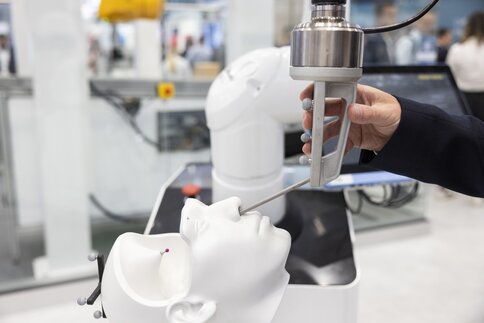
Medical device production, pharmaceuticals, and cosmetics – the hygiene requirements placed on robots become more demanding along with the tasks to be automated. Manufacturers accommodate this by optimizing the hygienic design of their robots. In fact, some premium manufacturers already offer machines designed for deployment in sterile environments.
Thus, automation is making inroads into highly sensitive fields of application including operating rooms, cell and gene therapy (CGT), biotherapy, active pharmaceutical ingredient (API) research, drug and cosmetics production, and lab automation. Of course, these sophisticated cleanroom robots meet all of the industry’s cleaning and decontamination requirements involving hydrogen peroxide.
Some other healthcare application fields are best automated using mobile robots. In this context, Automated Guided Vehicles (AGV) and Autonomous Mobile Robots (AMR) are revolutionizing intralogistics in hospitals and care facilities. They ensure reliable transport of medicines, laundry, or meals, thus relieving staff from unproductive walking. In addition, mobile assistance systems are increasingly relied upon to support people in need of assistance by offering mobility and facilitating interaction, thereby setting new flexibility standards in daily nursing routines.
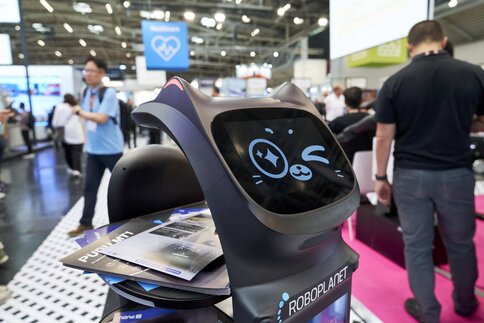
At the same time, mobile robots are revolutionizing transport and material-handling tasks in the pharma factory of the future. automatica exhibitors have already presented visionary AMR solutions for these highly sensitive areas. The world's first mobile robot specifically certified for sterile environments – a technological milestone for the pharmaceutical industry – was first presented at the 2025 exhibition.
While the traditional pharmaceutical industry is geared toward blockbuster drugs and massive batch sizes, personalized medicine requires the exact opposite: highly efficient small-scale production down to a batch size of 1. Examples include advanced cell and gene therapy, personalized cancer treatment, and implants anatomically adapted to specific individuals. Handling individualized small quantities in a cost-effective, safe, and completely sterile manner requires a fundamental shift in production technology – away from rigid production lines and toward highly flexible automation.
And flexibility is where highly advanced robotic systems shine: They form the technological foundation for personalized medicine as they balance maximum flexibility, uncompromising sterility, and economic scalability. This robot-based flexibility ensures the viability of producing extremely small batches of highly specialized life-saving therapeutics for individual patients in a cost-effective way, completely free of contamination, and compliant with regulatory requirements.
The convergence of robotics and AI is ushering in a new era of modern medicine. AI-powered HealthTech applications are pushing the boundaries here: Highly precise surgical robots assist surgeons while smart algorithms provide real-time medical imaging data during surgery. These systems act as sophisticated co-pilots for medical professionals, dramatically improving diagnostic accuracy and making minimally invasive procedures even safer and gentler on patients.
Outside the operating room, the most revolutionary effects of AI include the advancement of personalization and efficiency in healthcare. Smart robotic assistants flexibly adapt to the patients' individual needs and movement patterns in nursing and rehabilitation. At the same time, AI-powered automation solutions optimize processes in medical labs and significantly accelerate drug development. This technology makes a significant contribution to compensating the shortage of specialists and eases the burden on the healthcare system in the long run by taking on repetitive tasks and analyzing vast amounts of data with impressive speed and precision.
Automation for Beginners
Education & Young Talent

Automation is becoming increasingly important in the medical technology, pharmaceutical, and healthcare industry. The need to improve efficiency and compensate the shortage of specialists are the main drivers of automation in this domain. Modern robotics and automation solutions unlock highly precise production processes, support the manufacturing processes of medical products, and take on repetitive tasks. Robots also help reduce the workload of medical staff in the healthcare industry as they take on transport tasks and provide support in the operating room or rehabilitation.
Automation solutions in medical technology must comply with the highest precision, reliability, and hygiene standards. These include high manufacturing precision, easily cleanable surfaces, and minimized contamination risks. Robots for deployment in cleanrooms and sterile environments must also support appropriate hygiene protocols and meet any cleaning and decontamination requirements. In addition, there are regulatory requirements to be considered, such as the European Medical Device Regulation (MDR) and FDA regulations in the US.
Hospitals use, among others, mobile transport robots and medical assistance robots. Driverless transport systems (AGVs) and autonomous mobile robots (AMRs) handle logistics tasks such as transporting medicines, laundry, and meals. In addition, surgical robots assist medical professionals during procedures. And then there is nursing and rehabilitation, where robotic assistants support patients by providing services such as mobility.
Yes, automatica is also an important trade show for medical technology. As the world’s leading trade show for intelligent automation and robotics, it showcases innovative solutions for the manufacture of medical devices, pharmaceutical production, and healthcare. Numerous exhibitors demonstrate how even highly sensitive applications can be designed efficiently, precisely, and safely using modern robotics and automation. The program is complemented by specialized events such as the MedtecSUMMIT, the HealthTech Pavilion, and guided trade show tours, which promote professional exchange and networking within the industry.