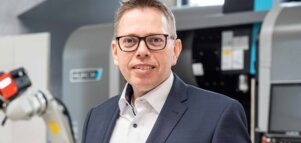
Jens Müller, zertifizierter Sachverständiger für Maschinensicherheit




The EU Machinery Regulation 2023/1230 will replace the existing Directive 2006/42/EC on January 20, 2027 without a transition period. Important to know: the MR is not a set of recommendations, but a binding piece of legislation. That means: compliance with its technical and legal requirements will become mandatory in all EU member states as the regulation enters into force. Failure to comply may cause trouble.
This new regulation is implemented during a period that is not exactly the automation industry’s economic boom cycle. Thus, it is no surprise that some machine, robot, and software makers as well as system integrators are not too happy about the additional effort the MR implementation entails. However: the MVO also ensures legal certainty and defines uniform standards for all machine manufacturers looking to market their products across the EU. This may benefit companies that have prioritized compliance with exacting manufacturing and safety standards in the past, while low-cost suppliers—regardless of where they are based—now face additional hurdles.
Another aspect shows why having the new MR makes sense: The current Machinery Directive entered into force back in 2006. This was a time when artificial intelligence, cobots, mobile robots, and other future technologies played hardly any role in automation environments. Now, as we look back on the huge technological advances of the past two decades, an update to the Machinery Directive is just necessary.
The European Union has published the Machinery Regulation to bring its regulatory framework in line with the state of the art. To that end, it has been expanded and made more specific as compared to the current Machinery Directive in some cases.
The evolution of the directive into a binding regulation applicable across Europe creates a level field for all market players. The Machinery Regulation is directly applicable in all member states and does not require transposition into national law. It also takes precedence over national law. At the same time, its scope was expanded to cover software and digital components used as standalone safety components, as well as significantly modified machines.
Despite all of this, the new Machinery Regulation barely differs from the existing Machinery Directive in many respects. According to safety expert Jens Müller, up to 80 percent of its content is identical. The major difference lies in the revised safety requirements, which the old directive outlined in much less detail. The most significant changes in this regard have been made in the fields of artificial intelligence, cyber security, cobots, and mobile robotics.
There are clearly defined provisions for AI-controlled robots and machines now. For example, the regulation requires that safety-critical AI systems undergo conformity assessments by independent institutions. This measure is intended to ensure the safety of adaptive systems in the long term—even as they continue to evolve.
And of course, the MR also covers the sensitive issue of protection against cyber-attacks. Here, the goal is to protect machines from unauthorized access or tampering by third parties. Integrated safety features must not be compromised due to connections with external devices or networks.
The MR also aims to minimize safety risks associated with human-robot interaction. For example, cobots are now subject to stricter safety requirements, especially if they feature AI capabilities. A third-party conformity assessment may also be required in such cases.
The latter may also apply to the integration of mobile robotic systems. This is another area clearly regulated in the new MR. Among other things, system designs must support stopping mobile robots from afar using remote control functions.

Given the MR’s impending entry into force, it is the main topic of discussion right now. However, the comprehensive regulatory framework for interconnected machinery in the mechanical engineering sector is set forth in the ‘digital trio’ comprising of the Machinery Regulation, the Cyber Resilience Act (CRA), and the AI Act. These three regulations mesh like gears as they link the aspects of physical safety, cyber security, and artificial intelligence, thus requiring a holistic approach.
automatica 2027 will present the great complexity of this topic in detail—with a particular focus on international regulations. Anja Schneider, automatica Exhibition Director, comments: “The future of automation will be shaped not only by breakthroughs in technology, but also by conducive regulatory framework conditions. That’s why automatica 2027 will put a spotlight on the topic of Markets and Regulations.”
Jens Müller, zertifizierter Sachverständiger für Maschinensicherheit
conflicting priorities of regulation and dynamic innovation: Walter Reithmaier, CEO Division Industry & Infrastructure, TÜV SÜD